


What is osteoporosis?
Bones are living tissues that are constantly regenerating. Under normal conditions, the body maintains a balance between the formation of new bone tissue and the resorption of aged bone. However, when this process is altered and not enough new bone is generated or more is reabsorbed than necessary, osteoporosis appears.
Osteoporosis is a disease that reduces bone density, weakening the skeleton and increasing the risk of fractures. Healthy bones have small pores in their structure, but in the presence of osteoporosis, these pores become enlarged, causing extreme fragility. As a result, fractures can occur even with minimal stress or without any apparent injury.
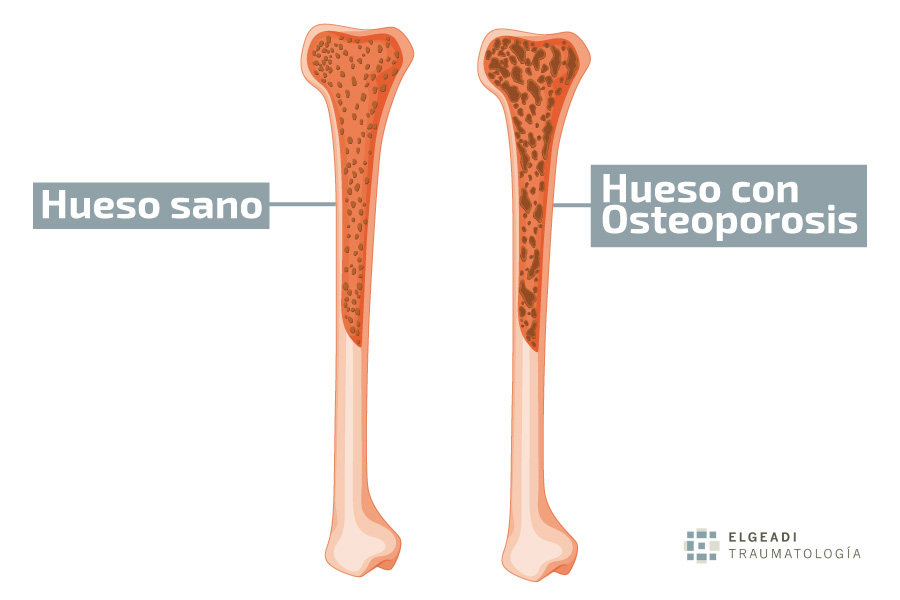
Types and causes of osteoporosis
There are four types or levels of osteoporosis that can occur in different cases, these are:
- Primary osteoporosis: This is the most common form and the one we see most frequently. It mainly affects women after menopause due to the loss of estrogen, a key hormone for bone health. In the shoulders, the loss of testosterone usually occurs after the age of 50, although symptoms usually appear at an older age, generally after the age of 60.
- Secondary osteoporosis: This type of osteoporosis is similar to primary osteoporosis, but with the difference that It is caused by external agents, which means that it can occur at any age.. External agents that can cause osteoporosis can be some medications as a result of their side effects and/or diseases such as leukemia or thyroid problems.
- Osteogenesis imperfecta: This type of osteoporosis is less common and can occur due to a genetic disorder at birth that causes mild or severe fragility of bones from a person's birth.
- Juvenile idiopathic osteoporosis: like osteogenesis imperfecta, It is a very rare type of osteoporosis. In this case it occurs at the growing age of children (8 to 14 years of age) and it is still unknown why it occurs.
Symptoms of osteoporosis
This pathology is asymptomatic, which can make it very difficult to detect and one can live with it for many years until it can be diagnosed.
Symptoms arise when the bones are already weakened and The patient presents obvious signs such as bone fractures that occur easily or back pain that may be the result of a broken vertebra.
The fractures that occur most frequently in patients with osteoporosis are those of the wrist, vertebrae or hip fracture.
Hip fracture due to osteoporosis
The Hip fracture is one of the most serious consequences that osteoporosis can produce, since it requires a highly complex and dangerous surgical intervention to fix it and guarantee the patient a good quality of life.
Fortunately, today there are very effective techniques depending on the type of fracture, such as minimally invasive interventions (hip arthroscopy) which has the great advantage of being less dangerous than open surgery, and allowing rehabilitation in a very short time. There are also partial and total prostheses that allow for a great improvement in quality of life. Each of these techniques is applied depending on the case in question, although it is advisable to go to experienced professionals since they are delicate treatments.
The team led by Prof. Dr. Elgeadi is a pioneer in the realization of minimally invasive hip surgeries using techniques with the most advanced technology, which is why it has worldwide recognition in this aspect.
Spine fracture due to osteoporosis
These types of fractures are very common and in many cases are not treated due to the complexity they present and the danger of performing repair surgeries in elderly patients.
Nowadays it is possible to diagnose and treat them appropriately thanks to the new technology and techniques in this field. With the spine endoscopy It is possible to operate on a patient with an incision of less than 1 centimeter, making it a much safer procedure for older people.

How to prevent osteoporosis?
Preventing osteoporosis is based on adopting healthy habits that help maintain bone density and reduce the risk of fractures. Three key factors contribute to strengthening bones and can be easily incorporated into daily life with the advice of a professional:
- Calcium Intake: Calcium is the most abundant mineral in the skeleton, which leads to it being the most important nutritional element for osteoporosisIt can be obtained through foods such as dairy products, nuts and green leafy vegetables, or through nutritional supplements in case of deficiency.
- Vitamin D: This vitamin fulfills the function of transporting calcium from the intestine to the bone, so it is essential for the calcium consumed to be effective in the generation of bone mass. The problem with this mineral is that it is difficult to find it in foods, so it is generally recommended to take a supplement that provides the recommended amount.
- Healthy lifestyle: it is essential to accompany everything treatment with a healthy lifestyle, doing physical exercise, good sleep and nutrition, in addition to avoiding all types of toxic agents such as tobacco or the consumption of alcoholic beverages.
The combination of these factors, together with regular medical check-ups, can contribute to the prevention of osteoporosis and the reduction of the risk of fractures.
Diagnosis and treatment of Osteoporosis
Osteoporosis is a disease that can be diagnosed through the patient's medical history that shows easy fractures and can be easily confirmed by bone densitometry: a test that detects the mineral density in the bones.
Treatments vary depending on the level of severity of osteoporosis that occurs, the age of the patient, and previous and pre-existing diseases and medications.. However, beyond pharmacological treatment, there are certain vital pillars that help manage the disease better and prevent it in many cases.
Importance of early diagnosis of osteoporosis
Early diagnosis of osteoporosis is essential, as it allows treatment to be started before the disease causes serious fractures, which can significantly affect a patient's quality of life. Detecting osteoporosis in its early stages offers the opportunity to implement lifestyle changes, such as improving diet or increasing physical activity, that can slow the progression of the disease and strengthen bones.

Clinic in Madrid for diagnosis and treatment of osteoporosis
Bones support our body, allow us to move and protect our organs, so taking care of their health is essential to maintaining a good quality of life.
At our clinic in Madrid, we have a medical team specialized in traumatology and bone health, with extensive experience in the diagnosis and treatment of osteoporosis. We offer preventive evaluations, bone densitometry studies and treatments adapted to each patient. In addition, we have advanced technology to carry out minimally invasive procedures that guarantee the safety of our patients.
It is never too early or too late to start taking care of your bone health. If you have questions or concerns, make an appointment and let our team offer you the best care for your bone well-being.


2 thoughts on “Qué es la osteoporosis: síntomas, causas y tratamiento”
My sister is 78 years old and has osteoporosis problems in both knees. What treatment is she taking?
Good morning,
Treatment for osteoporosis in the knees usually includes bone-strengthening medications, calcium and vitamin D supplements, low-impact exercises, and physical therapy. Sometimes physical therapy or supportive devices are recommended. It's important to continue to consult with your doctor to personalize your treatment.
Greetings