


Shoulder pain is one of the most common musculoskeletal conditions, especially for those who perform repetitive tasks, play sports, or spend many hours in poor posture. Identifying the root cause of the problem, monitoring the progression of symptoms, and determining the most appropriate treatment are the best ways to manage shoulder pain.

When to see a shoulder orthopedist for shoulder pain
When shoulder pain lasts more than a few days, limits mobility, or interrupts rest, it is necessary to see a specialized traumatologist. Waiting too long can cause a treatable injury to worsen or become chronic. An evaluation by a shoulder specialist is crucial, especially if the pain doesn't improve with relative rest or recurs repeatedly.
What symptoms indicate that shoulder pain needs medical evaluation?
Shoulder pain should be medically evaluated when symptoms such as persistent pain, difficulty lifting the arm, loss of strength, or discomfort that worsens at night appear. Attention should be paid if the pain occurs after a blow, fall, or sudden movement, as this may indicate a structural injury requiring diagnosis.
Symptoms such as tingling, a feeling of instability, clicking, or locking of the shoulder may also appear, which may indicate that there is an issue in the area. An evaluation by a traumatologist is essential to determine the cause and prevent the problem from progressing.
When shoulder pain stops being a passing annoyance
Shoulder pain becomes a cause for concern when it doesn't improve with relative rest within a few days or when it interferes with daily activities. It also ceases to be a minor problem when progressive stiffness, limited range of motion, or a need to compensate with other parts of the body to perform routine movements is reported.
What are the most common causes of shoulder pain?
Shoulder pain can have multiple causes. The shoulder is a complex and highly mobile joint, making it very vulnerable to overuse, which can lead to inflammation and wear and tear. The causes depend on age and activity level, and can occur in athletes as well as in people who perform repetitive movements or maintain poor posture for extended periods.
Rotator cuff injuries, tendinitis and bursitis of the shoulder
Rotator cuff injury is one of the most common causes of shoulder pain This affects the group of tendons that stabilize the joint. Due to repetitive use, age, or certain strenuous movements, the tendons can wear down and become inflamed, degenerate, or even partially or completely rupture.
Bursitis is the inflammation of the bursa, which acts as a cushion between tissues.. Pain is usually felt when moving the arm, especially when raising it, and nighttime discomfort may also occur. Both tendinitis and bursitis are related to overuse, pain from repetitive movements, or lack of muscle control in the shoulder area.

Osteoarthritis, instability, and other causes of shoulder pain
Shoulder pain can stem from degenerative processes such as osteoarthritis, where the cartilage in the joint gradually wears down, causing pain, stiffness, and limited movement. It is more common in older people, although it can also occur after previous injuries.
Shoulder instability is also a relevant cause, especially in young people or those with a history of dislocations, where the shoulder can become partially dislocated or generate a feeling of insecurity when performing certain movements.
Other causes such as adhesive capsulitis or frozen shoulder syndrome, subacromial impingement, or even pain radiating from the cervical spine, are determining factors, making a medical consultation essential to determine the origin of the problem and address it in the best way.
How does a shoulder traumatologist diagnose the origin of the pain?
The diagnosis of a painful shoulder involves a medical history with a physical examination and, if necessary, imaging tests.. The aim is to understand what caused it, how long it has been bothering you, what movements worsen it, and whether it affects the patient's daily life.
In this way, the traumatologist can determine if the condition is related to tendon injuries, joint problems, inflammation, or even pain originating outside the joint, and from there establish an effective treatment to recover.
What does the specialist explore during a shoulder consultation?
The specialist performs a complete examination of the shoulder, assessing active range of motion—what the patient can do independently—and passive range of motion, or what the joint allows when moved. They also analyze strength, stability, and the presence of pain at specific points.
During the consultation, maneuvers are performed to detect rotator cuff injuries, signs of impingement, instability, or capsular stiffness. These examinations are key to guiding the diagnosis, since many shoulder pathologies present similar symptoms but are treated differently.
Which imaging tests help confirm the diagnosis
When the examination requires it, imaging tests such as an X-ray to assess the condition of the bones or an ultrasound to analyze tendons and bursae can be requested, being especially useful in rotator cuff injuries.
Magnetic resonance imaging (MRI), on the other hand, offers a more detailed view of soft tissue structures and is key in cases of tears, deep inflammation, or diagnostic uncertainty. The choice of test will depend on each individual case, aiming to arrive at a precise diagnosis.

What treatments are available for shoulder pain?
The treatment for shoulder pain depends on the cause, the intensity of the symptoms, and the duration of the pain.. In most cases, treatment begins with a conservative approach focused on relieving pain, reducing inflammation, and restoring shoulder function. When these measures are insufficient or there is a structural injury that cannot be repaired, more advanced options are considered.
Physiotherapy, medication, and injections to relieve pain
Physiotherapy is among the leading treatments for shoulder pain, as it improves mobility, strengthens muscles, and corrects underlying issues. It can be combined with pain relievers or anti-inflammatory medication to manage symptoms in the early stages or during periods of increased pain.
In special cases, injections can help reduce inflammation and relieve pain in a localized way, although their indication should be individual and within a global treatment plan, avoiding using them as the only solution.
When is surgery considered for shoulder pain?
Surgery is considered when conservative treatment fails to improve symptoms or when there is an injury that cannot be resolved without intervention.. This decision is common in some rotator cuff tears, recurrent instability, advanced osteoarthritis, or in patients with persistent pain that significantly limits their quality of life.
The goal of surgery is to repair damaged structures, relieve pain, and restore shoulder function. This decision must be made on an individual basis, weighing the benefits, risks, and recovery expectations in each case.
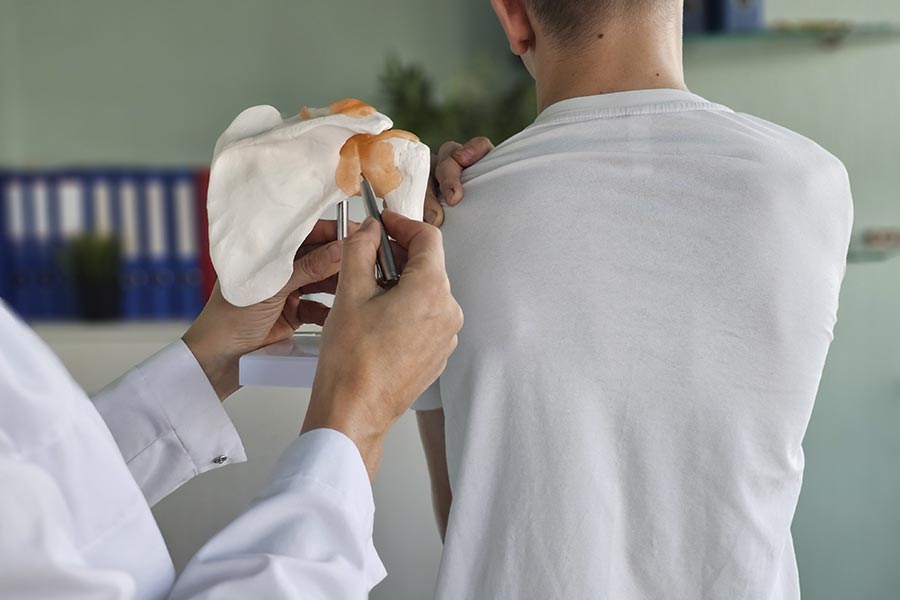
How to choose a shoulder specialist orthopedist
Choosing a traumatologist specializing in shoulders is key to obtaining an accurate diagnosis and a treatment truly tailored to the problem, knowing that going to an experienced professional will allow for better identification of the cause and avoid generic treatments that do not solve the problem.
Considerations should include specialization in shoulder pathology, clinical experience, treatment approach, and the ability to propose appropriate and effective options when needed.
What are the advantages of seeing a shoulder specialist for an accurate diagnosis?
A shoulder specialist can more accurately differentiate the various causes of pain, leading to a quick diagnosis and avoiding unnecessary tests. At Elgeadi Traumatology, the specialist can tailor the treatment to each individual, improving recovery and reducing the risk of the condition becoming chronic.
At Elgeadi Traumatology we work with a specialized and personalized approach, combining accurate diagnosis and tailored treatment to offer effective shoulder recovery.


