


When we talk about a vertebral fracture, we're referring to an injury to one or more bones in the spine that can occur due to trauma or bone weakening, as in osteoporosis. It can cause intense pain, limited movement, and even neurological complications if nearby structures are affected. Here we'll look at its symptoms, causes, and treatment options so you can act promptly and avoid long-term effects.

What is a vertebral fracture and why does it occur?
A vertebral fracture is the partial or complete break of a vertebra which can be caused by a strong impact, such as a fall or accident, or it can also develop progressively when the bone is weakened, especially in people with osteoporosis.
Since the spine supports a large part of the body's weight, any alteration in its structure can affect its stability or mobility. There are cases where fractures can go unnoticed, especially initially when there is no clear trauma.
What types of vertebral fractures exist
In the world of vertebral fractures, we can find different types that vary according to their shape and severity. The most common are compression fractures, where the vertebra is partially crushed, and these are often related to osteoporosis.
More complex fractures can also develop, such as burst fractures or those that seriously affect spinal stability, which require a more thorough assessment because they can compromise nerve structures.
What is the difference between a fracture caused by trauma and one caused by osteoporosis?
Traumatic fractures occur after a clear impact, such as an accident or a hard fall, and in these cases, even people with healthy bones can suffer a vertebral fracture.
Osteoporosis fractures, on the other hand, can occur from minimal exertion or even without an obvious event. Because the bone is weakened and loses strength, it breaks easily, increasing the risk of injury.
What symptoms does a vertebral fracture cause?
The clearest symptom of a vertebral fracture is often localized back pain, which can appear suddenly or gradually. This pain worsens with movement, standing, or lifting heavy objects.
Stiffness, limited function, and even postural changes may be experienced if the fracture affects the spinal structure. In many cases, the symptoms can be mistaken for muscle discomfort, a common mistake that often delays diagnosis.
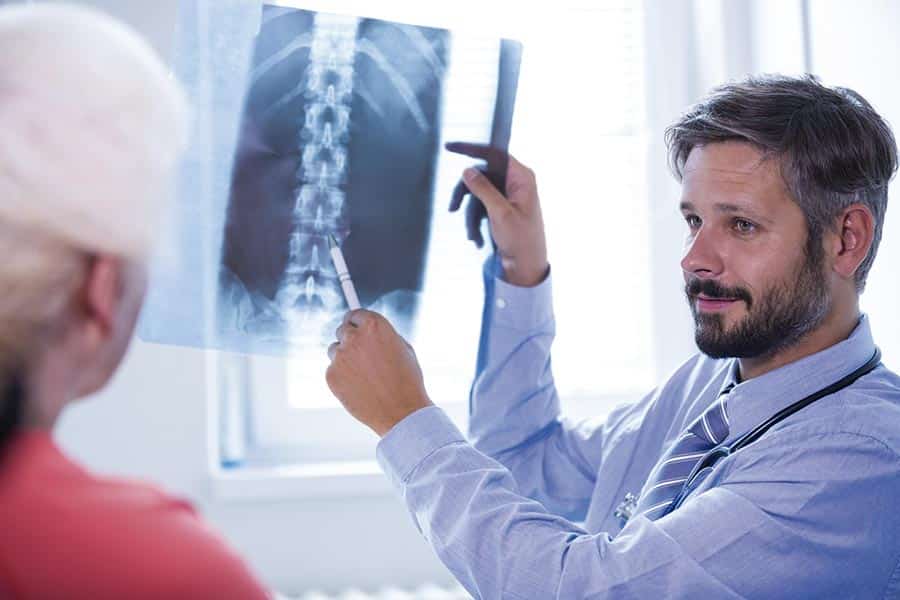
How to identify back fracture pain
The pain from a vertebral fracture feels intense, localized, and persistent., The pain does not easily improve with rest and may worsen when standing up or walking. It can also appear after a specific movement or for no apparent reason, especially in people at risk of osteoporosis, who are more prone to this type of fracture. Persistent pain is a clear sign that supports the suspicion of this type of injury.
What signs indicate possible neurological involvement?
When the fracture involves nerve structures, neurological symptoms appear such as tingling, weakness in the legs, or loss of sensation in certain areas.
In more complex cases, changes in bowel and bladder control or difficulty walking may occur. These signs require urgent medical evaluation, as they indicate possible nerve compression.
How is a vertebral fracture diagnosed?
The diagnosis of a vertebral fracture should always begin with a detailed clinical assessment, taking into account the patient's symptoms, history, and possible risk factors.
From there, imaging tests must be performed to confirm the fracture and assess its severity, since detecting it early will allow for appropriate treatment and thus avoid complications.
What medical tests confirm the fracture
X-rays are the most commonly used test to confirm a vertebral fracture., It allows for the immediate visualization of changes in the shape of the vertebra, such as compression fractures or displacements. It is a quick and accessible test and is the first step in the evaluation when a problem is suspected following acute pain or trauma.
If the x-ray is inconclusive or symptoms persist, additional tests can be added to confirm the diagnosis, thus better evaluating the bone structure and ruling out other causes of spinal pain.
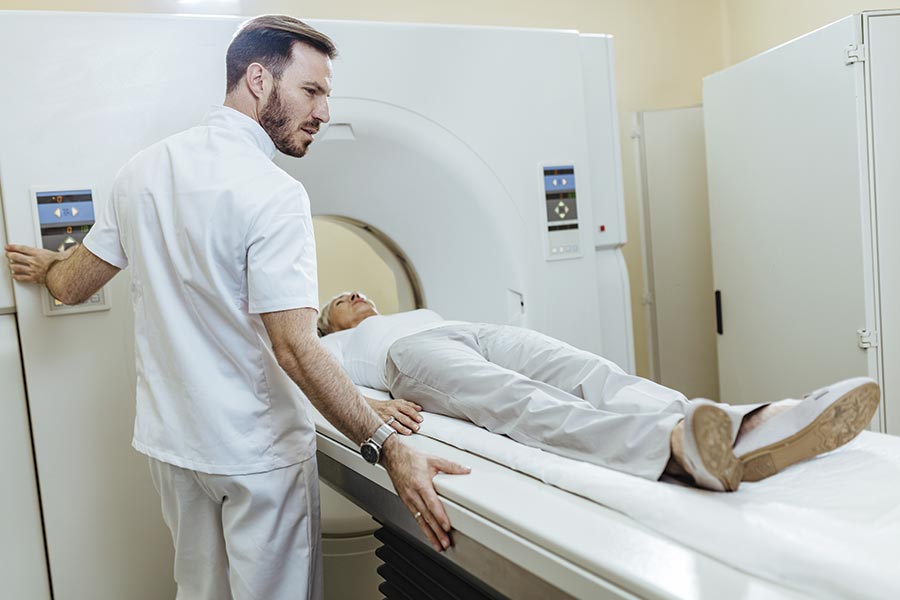
When is an MRI or CT scan necessary?
Magnetic resonance imaging (MRI) is performed when nerve damage is suspected or when it is necessary to determine whether a fracture is recent or old. It is also used to evaluate soft tissues that are not visible on an X-ray, such as discs or ligaments.
Computed tomography is used to analyze the structure of the bone in detail., especially in complex fractures or when surgery is being considered.
What is the most effective treatment for a vertebral fracture?
The treatment for a vertebral fracture will depend on the type of fracture, its stability, and the patient's symptoms. In most cases, and when there is no neurological involvement, conservative treatment is chosen, focused on pain management and gradual rehabilitation.
When a fracture is unstable, causes deformity, or affects nerve structures, surgery may be necessary. The choice of treatment should be based on an individualized assessment by a qualified professional to avoid complications and ensure a successful recovery.
When is conservative treatment with a brace recommended?
Conservative treatment is recommended for stable fractures that do not present significant displacement or neurological compromise. This includes relative rest, pain medication, and the use of an orthopedic brace to immobilize the area and promote bone healing.
This approach allows for a smooth and progressive recovery without the need for surgery, although it requires constant medical monitoring accompanied by a physiotherapy plan to regain strength and mobility without risk of relapse.
In what cases is spinal surgery necessary?
Spinal surgery is proposed when the fracture is unstable, there is displacement of the vertebra, or there is neurological involvement. It is also considered in cases where the pain is very intense and does not improve with conservative treatment.
The goal of spinal surgery is to stabilize the spine, correct any deformities, and protect the nerve structures. Different techniques are used, ranging from minimally invasive procedures to more complex surgeries, depending on the case.

How long does it take for a vertebral fracture to heal?
The recovery time for a vertebral fracture varies depending on the type of injury, the patient's medical history, and individual characteristics. In mild and stable fractures, bone healing typically occurs within 6 to 12 weeks, although full recovery may take longer if residual pain or loss of mobility develops.
In more complex cases, especially those requiring surgery or involving neurological involvement, the process can extend over several months. The outcome is determined not only by time but also by how the treatment and rehabilitation are managed.
What factors influence recovery?
The patient's age and bone quality are factors that will determine recovery time, especially in cases of osteoporosis, where recovery may be slower. The type of fracture, its location, and whether or not there is spinal stability also play a role.
Adherence to treatment, proper use of the brace, and subsequent rehabilitation are key factors that make a difference in the outcome. A well-guided recovery will definitely reduce the risk of persistent pain or relapses.
What complications can arise if it is not treated properly?
If a vertebral fracture is not treated properly, it can lead to complications such as chronic pain, functional limitations, and postural changes, such as kyphosis, complications that can worsen over time, directly affecting the patient's quality of life.
In more complex situations where compression of nerve structures causes symptoms of weakness, loss of sensation or problems in sphincter control, proper assessment and follow-up are essential to avoid sequelae.
When to see a spine specialist orthopedist
You should see a spine specialist traumatologist if you experience intense back pain after a fall, a blow, or as a result of exertion., especially if it doesn't improve with rest or persists for several days. It's also important to check if the pain is limiting mobility or preventing the patient from carrying out their daily activities normally.
If neurological symptoms such as tingling, leg weakness, loss of sensation, or changes in bowel and bladder control appear, urgent medical help should be sought. In these cases, a prompt evaluation will allow for confirmation of the diagnosis, ruling out complications, and the application of the most appropriate treatment as soon as possible.
At Elgeadi Traumatology, we offer a specialized approach to spinal pathology., Offering accurate diagnosis and personalized treatments for each vertebral fracture, aimed at relieving pain, restoring function and preventing long-term complications.


